
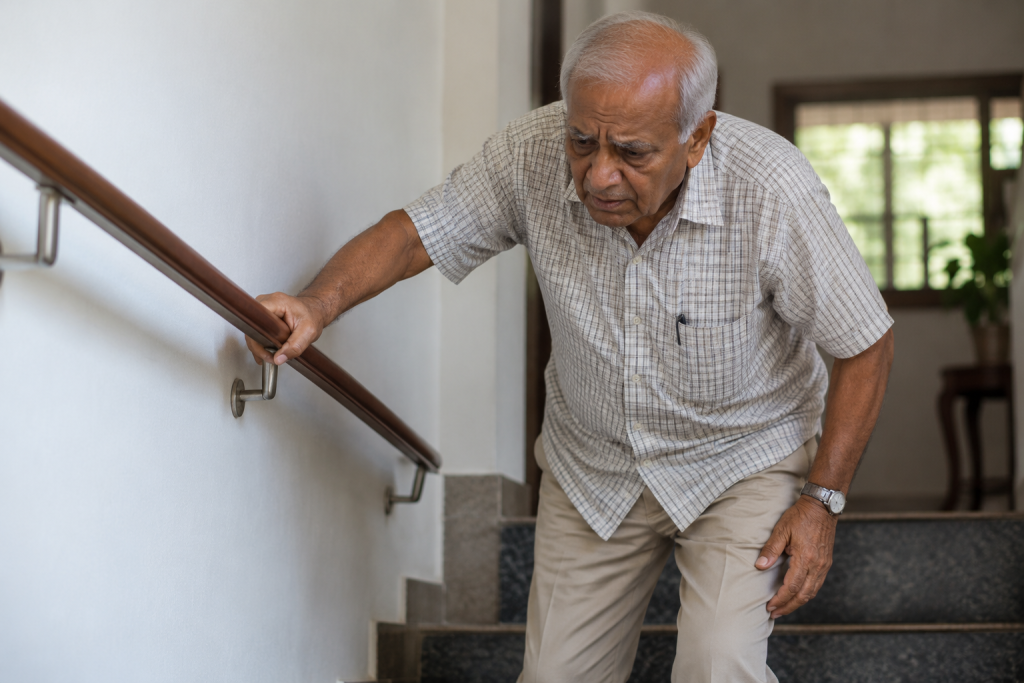
Understanding the vicious cycle of fear, inactivity and declining independence—and how families can help older adults regain confidence.
When the fear of falling begins to limit life
An elderly man returns home after nearly losing his balance while walking to the local pharmacy. He was not injured, but the experience unsettles him. Over the following weeks, he stops going out alone, avoids the stairs, and begins asking his family for help with activities he previously managed independently.
His family is relieved that he has not fallen. Yet something important has changed: his fear of falling is beginning to take away his independence.
This is a common but often overlooked problem in older adults. Fear of falling may develop after an actual fall, a near-fall, or even without any previous fall. It should not simply be dismissed as anxiety or an inevitable consequence of ageing.
The good news is that, with appropriate assessment and support, many older adults can regain confidence, improve their mobility, and remain independent for longer.
How common is the problem?
Falls are a major cause of injury, disability, and loss of independence among older people. A systematic review and meta-analysis estimated that approximately 31% of older adults in India experience falls, although estimates vary across studies and populations.
Fear of falling is not limited to those who have already fallen. An older person who notices increasing unsteadiness, difficulty climbing stairs, or reduced muscle strength may begin avoiding activities because they no longer feel safe.
The concern is not simply the fear itself. It is what happens when that fear starts determining how a person lives.
Why are older adults afraid of falling?
Several factors may contribute, often acting together.
Previous falls or near-falls: A fall that causes injury or hospitalisation can undermine confidence. Even an incident without injury may leave someone anxious about moving independently.
Muscle weakness and poor balance: Difficulty rising from a chair, turning, or walking on uneven ground can make everyday movement feel unsafe.
Dizziness and visual impairment: Blood pressure drops on standing, medication effects, vestibular problems, and impaired vision may contribute to instability.
Medicines: Sedatives, sleeping tablets, some antidepressants, and certain blood pressure medicines can increase fall risk in susceptible individuals. Medicines should be reviewed by a clinician rather than stopped independently.
Environmental hazards: Slippery floors, loose rugs, poor lighting, clutter, and unsuitable footwear can make movement genuinely hazardous.
Anxiety and depression: Worry may persist even after the original physical problem improves. Low mood can further reduce motivation and activity.
Identifying the main contributors is essential. Reassurance alone is unlikely to help if the person remains physically unsteady or the home environment is unsafe.
The vicious cycle: fear leads to weakness
Fear of falling can create a self-reinforcing cycle:
Fear → reduced activity → muscle weakness and poorer balance → increased fall risk → greater fear.
An older person may initially avoid only outdoor walks. Gradually, they may stop visiting friends, shopping independently, or participating in family activities. Reduced movement can weaken muscles and impair endurance, making the activities they fear increasingly difficult.
Families sometimes unintentionally reinforce this cycle by insisting that an older person should not walk without someone holding them. Assistance may be necessary in some circumstances, but excessive restriction can undermine confidence and physical function.
The objective is not to eliminate every possible risk by avoiding movement. It is to make movement safer and help the person regain appropriate confidence.
Warning signs families should not ignore
Look for changes in behaviour and mobility, including:
- Walking less or refusing to go outdoors.
- Holding furniture or walls for support.
- Avoiding stairs, bathing, or standing without assistance.
- Taking unusually short, cautious steps or appearing unsteady.
- Struggling to rise from a chair or recover after a near-fall.
- Repeatedly seeking reassurance before attempting ordinary activities.
- Giving up hobbies, social visits, or errands because of fear.
These changes deserve attention, particularly when they are new, progressive, or accompanied by dizziness, weakness, or previous falls.
What can families do?
A safer home and supportive approach can make a meaningful difference.
A practical family checklist
- Remove loose rugs, trailing wires, and clutter from walking routes.
- Improve lighting, especially between the bedroom and toilet at night.
- Install appropriate grab bars in the bathroom and near the toilet.
- Use non-slip bathroom surfaces and well-fitting footwear.
- Keep frequently used objects within easy reach.
- Arrange a medication review if there is dizziness, drowsiness, or unsteadiness.
- Encourage suitable strength and balance exercises.
- Seek assessment for recurrent near-falls, new walking difficulties, or unexplained dizziness.
How families respond matters, too. Avoid saying, “There is nothing to be afraid of,” because the person may genuinely feel unsafe. Equally, do not encourage them to remain inactive simply because a fall is possible.
Instead, ask: “Which activities make you feel unsafe? What would help you do them more confidently?”
Support should be proportionate to the person’s abilities and risks—not based on fear alone.
How can fear of falling be treated?
Effective management addresses both the physical causes of instability and the fear that restricts activity.
1. Identify the underlying causes
A comprehensive geriatric assessment may evaluate previous falls, walking and balance, muscle strength, blood pressure changes on standing, vision, cognition, footwear, home hazards, and medicines. Additional investigations depend on the person’s symptoms and clinical findings.
This helps distinguish between someone whose fear reflects a genuine, untreated physical problem and someone whose confidence remains impaired despite relatively safe mobility.
2. Rebuild strength and balance
Individualised exercise may include progressive resistance training, balance exercises, and functional activities such as rising from a chair, turning, and walking safely. A physiotherapist can adapt the programme to the person’s abilities and fall risk.
For someone who has become inactive, starting at an appropriate level and progressing gradually is generally more useful than demanding a sudden return to previous activity.
3. Make the environment safer
Home modifications can reduce avoidable hazards. A walking stick or walker may be helpful when appropriately selected and fitted, but the person may also need training to use it safely.
An assistive device should support mobility—not become a reason to avoid movement altogether.
4. Address persistent anxiety
Some older adults remain afraid even after physical problems have been addressed. Education, gradual return to feared activities, and psychological approaches such as cognitive behavioural therapy may help selected individuals.
The aim is to restore confidence through safe, achievable experiences rather than forcing the person to confront situations for which they are not ready.
5. Measure progress beyond falls
Success is not defined only by whether another fall occurs. It also includes being able to walk to the garden, bathe more confidently, visit friends, rise from a chair independently, or resume a valued activity.
These everyday gains can be important indicators of recovery.
When is urgent medical attention needed?
Seek emergency medical care if a fall is accompanied by:
- Loss of consciousness, new confusion, or difficulty waking.
- Suspected fracture, severe pain, deformity, or inability to bear weight.
- A head injury, especially in someone taking anticoagulants or other blood-thinning medicines.
- New facial drooping, weakness, or difficulty speaking.
- Chest pain or severe breathlessness.
Do not attempt to stand or walk someone with a suspected fracture or serious spinal injury. Call emergency services.
Even without an injury, a sudden change in balance, recurrent falls, or new dizziness warrants prompt medical assessment.
A few common questions
Can someone fear falling without ever having fallen?
Yes. Weakness, impaired balance, dizziness, and anxiety can all contribute to fear before a first fall.
Should an older person stop walking if they are afraid?
Not automatically. Unnecessary restriction can worsen weakness and independence. The cause of the fear should first be assessed, and activity made appropriately safe.
Can exercise help?
Appropriately prescribed strength and balance training can improve physical function and reduce fall risk. Exercise should be adapted to the individual’s health, mobility, and abilities.
Is fear of falling purely psychological?
No. It often reflects a combination of physical limitations, previous experiences, environmental hazards, and emotional factors.
Help older adults move with confidence
Fear of falling is neither a weakness of character nor an inevitable part of ageing. It can be an early signal that an older person needs help with balance, muscle strength, medicines, vision, or confidence.
The answer is not simply to tell them to be careful—or to stop doing things independently. It is to understand why they feel unsafe and address the factors that can be changed.
At Charvaka Clinic, a comprehensive geriatric approach can help identify contributing factors, assess mobility and fall risk, and develop an individualised plan to preserve safety, confidence, and independence.
The goal is not merely to prevent falls. It is to help older adults continue moving, participating, and living with dignity.
References
- World Health Organization. Falls. Fact sheet.
- Sherrington C, et al. Exercise for preventing falls in older people living in the community. British Journal of Sports Medicine. 2019;53:898–906.